BLOG
>
Blog
Chargeback Prevention for Travel Businesses: 2026 Strategies
How hotels, airlines, and online travel agencies can reduce disputes, stay under Visa's tighter VAMP thresholds, and protect cash flow across long booking windows.
Elizabeth Balash
11/19/2026

7
MIN READ
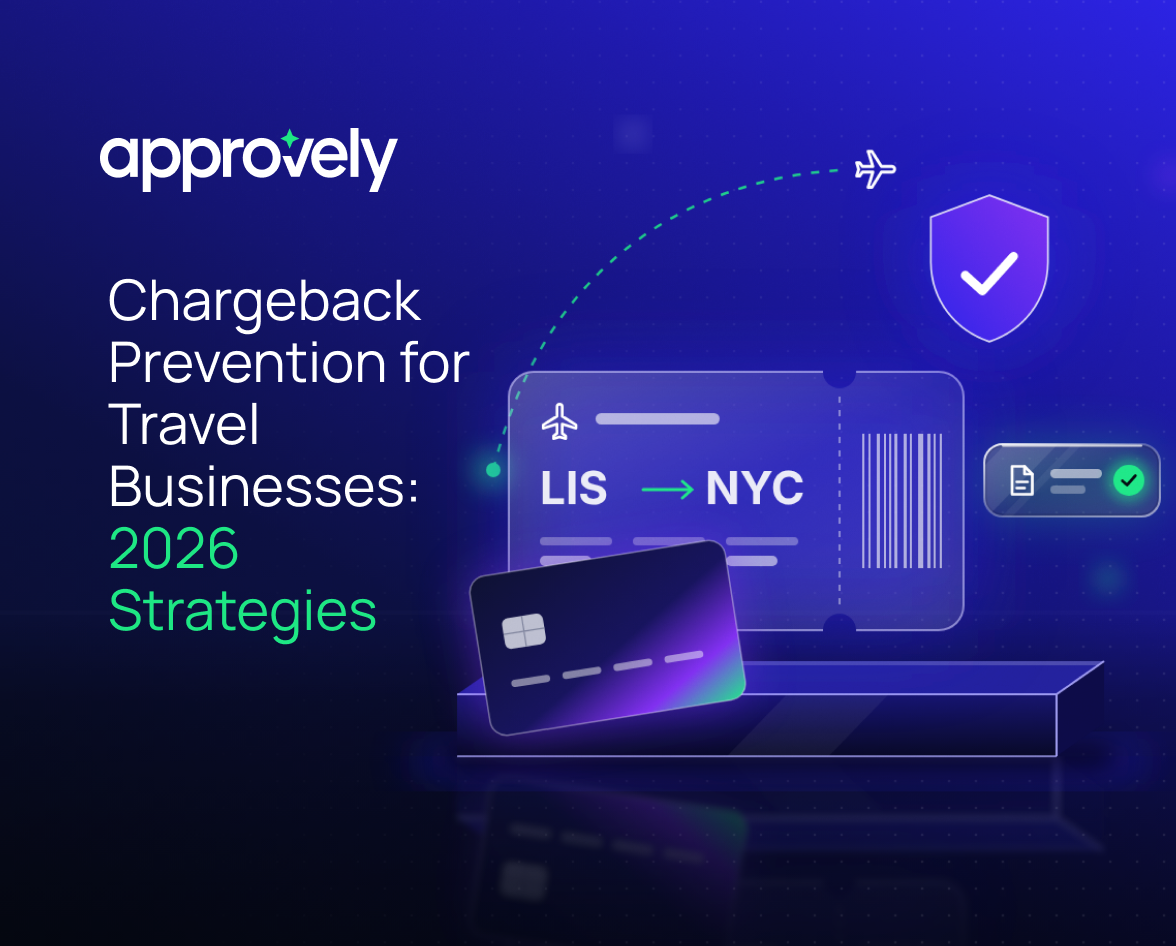
Chargeback Prevention for Travel Businesses: 2026 Strategies
How hotels, airlines, and online travel agencies can reduce disputes, stay under Visa's tighter VAMP thresholds, and protect cash flow across long booking windows.
A travel booking is paid for today and delivered weeks or months later. A lot can happen in that gap. A flight is rescheduled, a storm closes an airport, a guest forgets which booking site they used, or a no-show fee posts under a name the cardholder doesn't recognize.
Each of those moments can turn into a dispute, and in 2026 each dispute weighs more than it used to. Visa's merchant threshold under its Acquirer Monitoring Program (VAMP) dropped to 1.5% in April, issuers say cardholders are more willing to dispute, and travel already carries the highest average chargeback amount of any sector.
This guide covers where hotel payment chargebacks and airline payment disputes begin, what the card networks now measure, and the travel chargeback prevention strategies that hold up through peak season.
Why Travel Chargebacks Cost More in 2026
Most travel disputes have nothing to do with stolen cards. In its June 2026 analysis of airline ticketing chargebacks, Chargebacks911 found that the bulk of travel disputes trace back to cancellations, delays, refunds, and unmet expectations rather than conventional payment fraud. That is useful to know, because it places most of the exposure in areas a travel business controls: its policies, its communications and how quickly it refunds.
Three features of travel make those disputes more expensive than in other card-not-present categories:
- Long fulfilment windows. Money is captured at booking, but the service happens later, and for many reason codes the dispute clock runs from the expected service date. A booking taken in January can become a chargeback in September.
- Several parties per trip. An online travel agency (OTA), a hotel, an airline, and a payment facilitator may all touch one itinerary. Mastercard's chargeback cost research notes that travelers who book through third parties are less likely to contact the merchant before going to their bank.
- High ticket values. A disputed booking takes the full fare or room rate with it, plus fees, staff time and, increasingly, network penalties.
What VAMP Now Measures for Travel Merchants
VAMP combines two signals into one ratio: fraud reports filed by issuers (TC40s) and disputes (TC15s), divided by settled card-not-present transactions for the month. Nearly all travel sales are card-not-present, so almost every booking is in scope. We covered the enforcement timeline in detail in our VAMP enforcement guide for regulated merchants. For travel, the important points are below.
Visa's merchant tier applies once an account reaches 1,500 combined fraud and dispute events in a month, and the published VAMP threshold schedule shows how far the acquirer limits sit below the merchant one. In practice, your acquirer's tolerance is the number to plan around.
Travel also has a timing problem that other sectors don't. Disputes arrive months after the sale, but the ratio divides them by the current month's settled transactions. A busy summer of disruptions followed by a quiet booking month in the autumn can push the ratio up even when nothing new has gone wrong. Tracking the ratio weekly, and forecasting it against your booking curve, is part of travel chargeback prevention in 2026.
Where Hotel Payment Chargebacks Start
Hotel disputes cluster around the charges a guest didn't expect to pay or doesn't remember agreeing to. The Merchant Risk Council's 2026 review of travel disruptions points to no-shows and late cancellations triggered by delayed flights, along with gaps between the amenities guests expected and what they found. Each trigger has a matching piece of evidence, and the evidence has to be captured when the booking or stay happens, not assembled after the dispute arrives.
OTAs and booking platforms that collect on behalf of properties carry an extra layer of risk, because the merchant of record may not be the business that delivers the stay. If that describes your model, our guide to split payments, escrow and compliance for marketplaces explains how fund flows affect who carries dispute liability.
Airline Payment Disputes After the DOT Automatic Refund Rule
For flights to, from, or within the United States, refund obligations are now written down. Under the U.S. Department of Transportation's refund rule, which took effect in October 2024, carriers must issue prompt, automatic refunds when they cancel or significantly change a flight, and the passenger declines the alternative offered. Ticket agents must refund on request in the same situations. The rule counts a domestic delay of more than three hours, or an international delay of more than six, as a significant change, along with airport changes, added connections, and downgrades.
This changes how airline payment disputes play out. When a refund is clearly owed and arrives late, the passenger's chargeback is almost impossible to defend, and it lands on the VAMP ratio as well. When the flight operated as sold, the same clarity works in the airline's favour, provided the operational records can be retrieved quickly. Pressure is also rising: Chargebacks911 linked the 2026 summer dispute increase to higher fares, operational disruption, global conflicts and a surge of cross-border bookings around the FIFA World Cup.
Matching the claim to its reason code tells you which record to send. The mapping below follows Chargeflow's airline reason code guide; confirm the code on each live case, since network rule versions change.
Know where your dispute ratio is heading before peak season
Approvely connects payments, chargeback prevention and fraud monitoring in one view, so you can see your VAMP exposure by property, route or booking channel before your acquirer does.
Seven Travel Chargeback Prevention Strategies for 2026
The strategies below are ordered from the booking flow through to the disruption day. Most cost little to put in place, and each one closes a specific gap that issuers see repeatedly.
1. Make the billing descriptor match the booking
A guest who booked "Harbour View Lisbon" through an OTA and sees a holding company's name on their statement will often file a fraud claim. Use the brand the customer booked with, add the city, and include a phone number or short URL where the network allows it. If you operate several properties or brands, use dynamic descriptors per booking. We saw the same pattern in subscription gaming billing, where unclear descriptors drive a large share of "unrecognized" disputes.
2. Put cancellation terms where cardholders cannot miss them
Show the cancellation, no-show, and refund terms next to the pay button, require an unticked checkbox to accept them, and repeat them in the confirmation and the pre-arrival email. Store the time of acceptance and the version of the policy the guest saw. Issuers rarely side with a merchant whose terms sat behind a link in the footer.
3. Refund before the issuer does
When a refund is owed, speed is the cheapest form of dispute prevention. Automate refunds for cancellations and qualifying schedule changes, send them to the original payment method, and include the acquirer reference number (ARN) in the confirmation email so the cardholder's bank can trace the credit. Publish realistic refund timelines on your help pages; many "credit not processed" chargebacks are filed by customers who simply didn't know how long a refund takes to appear.
4. Answer disputes at the pre-dispute stage
Visa's post-purchase solutions let travel merchants act before a dispute is filed. Order Insight shares booking details with the issuer when a cardholder queries a charge, and Visa's April 2026 update lets merchants submit Compelling Evidence 3.0 inside Order Insight to counter friendly fraud claims. Rapid Dispute Resolution (RDR) automatically refunds pre-disputes that match rules you set, such as low-value fare differences. Mastercard offers comparable pre-dispute alerts through Ethoca. Used together, these tools stop many disputes from ever reaching the chargeback stage.
5. Authenticate where the liability shift is worth it
EMV 3-D Secure moves liability for most fraud-coded disputes to the issuer when the cardholder is authenticated. Apply it by risk: first-time customers, high-value or last-minute bookings, and routes with a history of card testing. Keep in mind that 3DS protects against fraud claims, not service disputes, and that too much friction lowers approvals. Our deep dive on authorization rates covers how to balance the two.
6. Connect booking, supplier and payment records
The evidence that wins travel disputes is usually spread across a property management system, a global distribution system, OTA extranets and a customer service platform. Link every transaction ID to its reservation ID or passenger name record (PNR) at the point of sale, so that a dispute response takes minutes instead of days. Response deadlines are fixed, and a strong case submitted late still loses. Our comprehensive guide to reducing chargebacks covers representment workflows in more depth.
7. Plan for disruption days and the cash they consume
Weather, air traffic control outages and strikes now cause sustained disruption rather than isolated events. Write a disruption playbook before peak season: who sends proactive notices of passenger and guest rights, how rebooking and refund options are presented, and how refund queues are staffed.
Then plan the liquidity side. A large disruption creates a burst of refunds at the same moment that reserves and settlement delays hold back incoming funds. Faster settlement and clear visibility of available balances let you refund promptly instead of waiting for the issuer to do it for you. For operators selling across borders, our article on multi-currency payment processing for global travel platforms covers refunds and currency conversion.
Travel Chargeback Prevention: Frequently Asked Questions
1. What is travel chargeback prevention?
It is the set of policies, payment tools and data practices that stop travel bookings from turning into card disputes. It covers clear billing descriptors and cancellation terms, prompt refunds, pre-dispute tools such as Visa Order Insight and RDR, authentication, and fast access to the records needed to answer the disputes that still arrive.
2. Why do hotels see so many payment chargebacks?
Hotel payment chargebacks usually come from charges the guest didn't expect: no-show and late cancellation fees, incidentals billed after checkout, and bookings made through an OTA that appear under an unfamiliar name. Most can be prevented with visible terms, captured authorizations at check-in and descriptors that match the property name.
3. Can airlines win payment disputes over cancelled or delayed flights?
Yes, when the records support them. If the flight operated as sold, or the passenger accepted rebooking or a credit, flight status data and the passenger's own acceptance are strong evidence. If a refund was owed under the DOT rule and was not paid promptly, the dispute is very hard to win, so the better course is to refund first.
4. Do refunds and pre-dispute resolutions count toward my VAMP ratio?
A refund issued before a dispute is filed does not create a dispute record. Pre-disputes resolved through Visa's pre-dispute tools are generally kept out of the dispute count, although an issuer's fraud report on the same transaction can still count. Refunding after a chargeback has already posted does not remove it. Confirm the current treatment with your acquirer, since Visa updates VAMP rules periodically.
5. How does Approvely support travel businesses?
Approvely provides payment infrastructure for travel operators that connects card processing, fraud monitoring, chargeback protection, compliance and settlements in one platform. Travel businesses get visibility into dispute ratios across channels and faster access to funds when refund volumes rise.
Payment infrastructure built for travel's long booking windows
Approvely brings payments, chargeback prevention, compliance and liquidity together for hotels, airlines, OTAs and tour operators: a 96.43% card acceptance rate, a 98.05% chargeback protection rate, same-day onboarding, go-live in 3 to 5 business days, and US-based support.
Share this post


Blog